

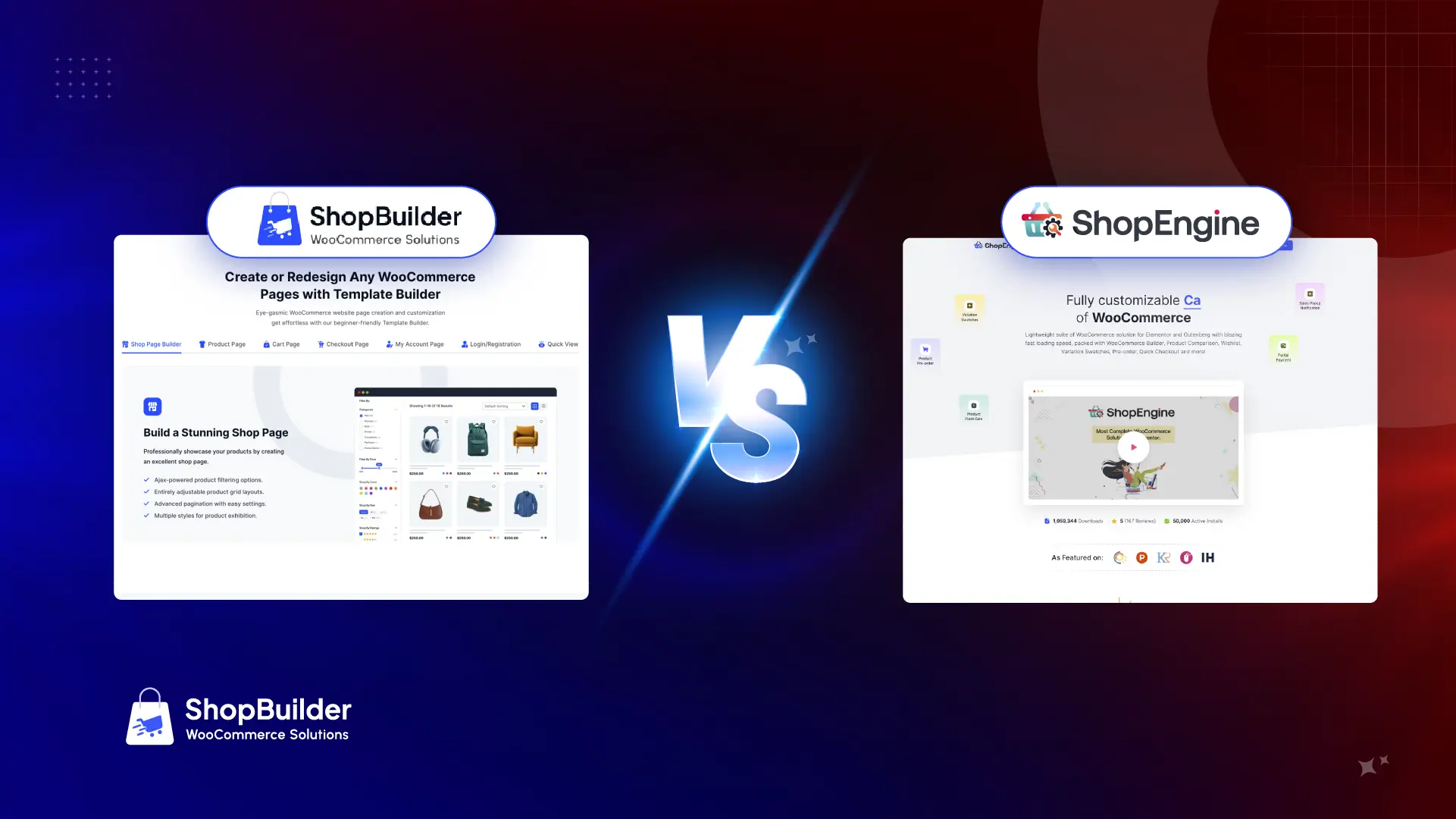
When you search for WooCommerce store builders, you may come across these two popular plugins: ShopBuilder and ShopEngine.
The problem arises when you decide to select only one of these two. To make an informed decision, you need a head-to-head comparison between these two plugins.
That’s what we’ve shared in this article about ShopBuilder vs ShopEngine. Hence, keep reading to the end and pick your ideal one.
ShopBuilder vs ShopEngine: The Ultimate Comparison
Here, we’ll compare ShopBuilder and ShopEngine across several criteria, providing a detailed analysis to highlight the strengths and weaknesses of each plugin.
Get a Glance at Each Plugin
Before we start to make a head-to-head comparison between ShopBuilder and ShopEngine, let’s get an overview of each.
ShopBuilder
ShopBuilder is a simple yet powerful WooCommerce store builder. This beginner-friendly, no-code WordPress plugin enables anyone, regardless of their technical expertise, to create high-converting WooCommerce stores.
This store builder supports Elementor and features pre-made templates, exceptional modules, and widgets to ease your store creation journey. So, it can be your ideal companion in building a WooCommerce store that customers love.
ShopEngine
ShopEngine is a WooCommerce store builder that enables anyone to create a professional WordPress shop without needing any coding.
Similar to ShopBuilder, it also features pre-built templates, modules, and widgets to help you easily build your store and enhance its functionality.
Lastly, it supports both Elementor and Gutenberg editors.
Key Features Comparison
This section provides an overview of the key features of ShopBuilder and ShopEngine through a comparison table below.
| Feature | ShopBuilder | ShopEngine |
| Page Builders | Elementor-based (Gutenberg support will be available soon) | Elementor + Gutenberg compatible |
| Widget & Module Count | 100+ widgets and 24+ modules | 60+ widgets and 20+ modules |
| Templates | 30+ pre-built templates | 16+ pre-designed templates |
| AJAX Features | AJAX product filter, load more pagination | AJAX-based filter & pagination |
| Cart/Checkout Customization | Full drag-and-drop builders for cart, checkout, mini-cart, quick-checkout, multi-step checkout, and customize checkout fields | Cart page and checkout page builder, quick checkout module |
| Quick View | Yes | Yes |
| Wishlist | Yes | Yes |
| Product Comparison | Yes | Yes |
| Sales/Flash Notifications | Yes | Yes |
| Pre‑Orders & Partial Payments | Yes | Yes |
| Currency Switcher & Smart Coupons | Yes | Yes |
| Multi‑Language & Theme Compatibility | Multi-language support; works with most themes; template override options | Multi-language support; compatible with popular themes; Gutenberg & Elementor support |
Editorial Notes: Please note that the information in the table is subject to change, as both plugins receive regular updates, and we manually update the information accordingly.
Ease of Use & Interface
ShopEngine and ShopBuilder are designed to simplify the process of creating a WooCommerce store. However, ShopBuilder stays ahead of ShopEngine as the more newbie-friendly option.
ShopBuilder’s interface is simpler. It promotes easy navigation and has a less cluttered dashboard. Additionally, ShopBuilder offers easy-to-read documentation and beginner-friendly tutorials. Thus, newcomers to WordPress or WooCommerce can easily get started with creating a store.
On the contrary, ShopEngine is user-friendly, but it has a larger feature set, which can be overwhelming for beginners due to the numerous options and settings.
However, ShopEngine’s tutorials and dedicated support will help beginners adapt with some guidance.
Built-in Templates, Modules, and Widgets
ShopEngine offers over 16 pre-designed templates for WooCommerce stores, covering single product pages, shop pages, checkout pages, cart pages, and account pages.
These templates are responsive and SEO-optimized and are highly customizable with Elementor and Gutenberg editors.
Additionally, this plugin features around 20 modules, including Backorder, Badges, Price Currency Switcher, Flash Sale Countdown, Partial Payment, and more, to help you boost sales.
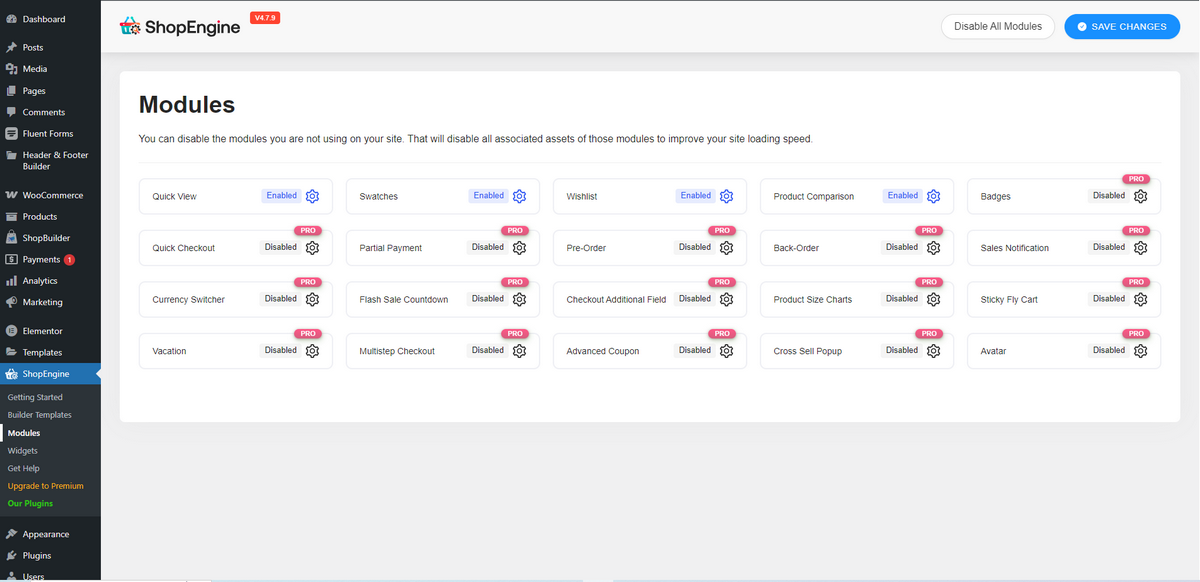
It also features over 60 widgets to help you level up your WooCommerce store. All these make it suitable for those who need extensive customization options for complex stores.
ShopBuilder comes with a broad selection of templates, modules, and widgets. You get 30 pre-made templates to help you launch your store in a few clicks. Additionally, you receive over 20 modules and 100+ widgets, all optimized for quick setup with Elementor.
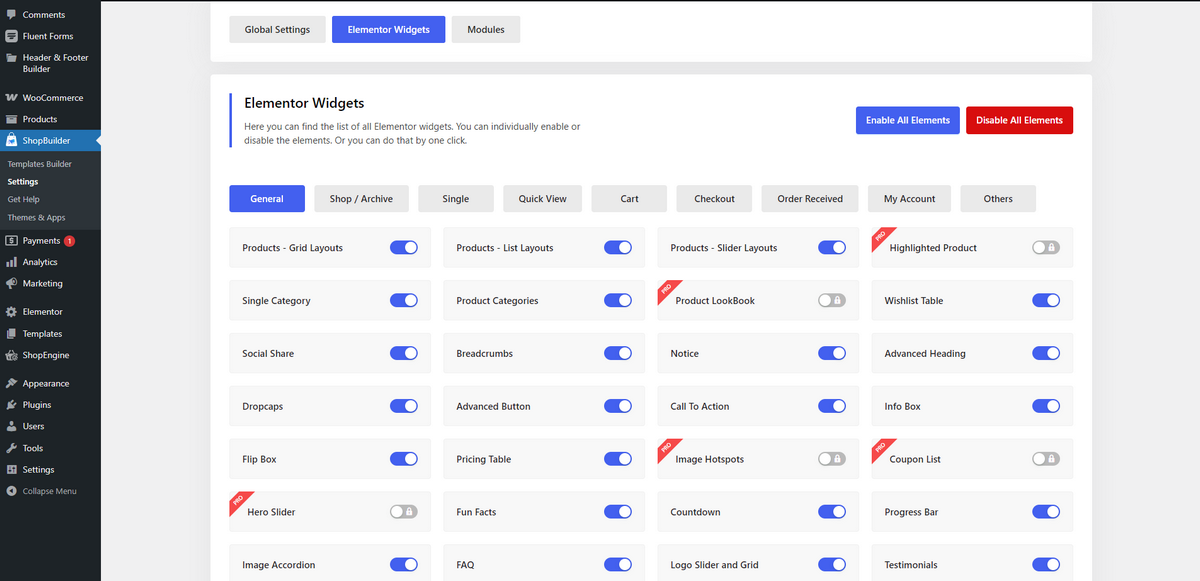
These templates are responsive and SEO-friendly, similar to ShopEngine, but are designed for users who prioritize speed and minimal setup requirements. ShopBuilder’s templates are more beginner-friendly and suitable for users who are building stores with minimal technical knowledge.
Customization Freedom
ShopBuilder provides extensive customization freedom. It features a curated set of widgets and modules (e.g., Quick View, Wishlist, Sales Notification, Currency Switcher) to customize product pages, archives, checkout, and cart layouts with Elementor, making your store more conversion-friendly.
The template builder is easy to use, allowing you to adjust layouts and styles with minimal effort. ShopBuilder is better suited for users who need functional and visually appealing stores without requiring advanced configurations.
ShopEngine also offers complete flexibility for customization. With over 60 drag-and-drop widgets and 15+ modules, this plugin provides virtually everything required to build or modify WooCommerce stores.
Lastly, ShopEngine supports advanced customization through its template builder, allowing users to modify single product pages, checkout layouts, shop pages, and account dashboards with Elementor or Gutenberg. That’s where ShopBuilder falls short, as it doesn’t currently offer support for Gutenberg.
Customer Support & Ratings
ShopEngine provides dedicated customer support through a ticketing system and tutorials. Users praise this plugin’s features and functionalities, giving it good ratings on the WordPress plugin directory.
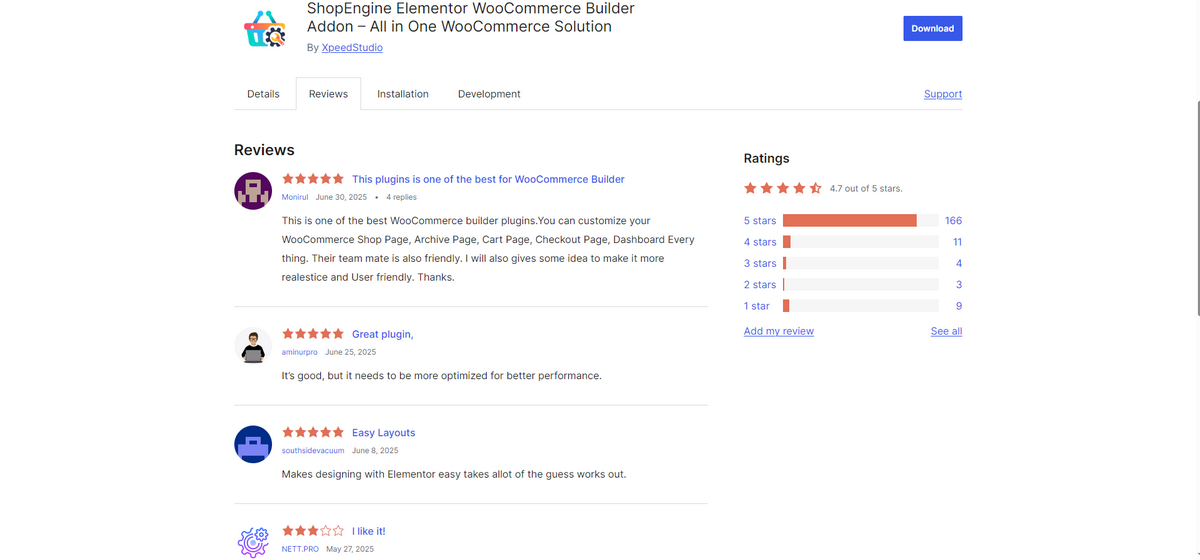
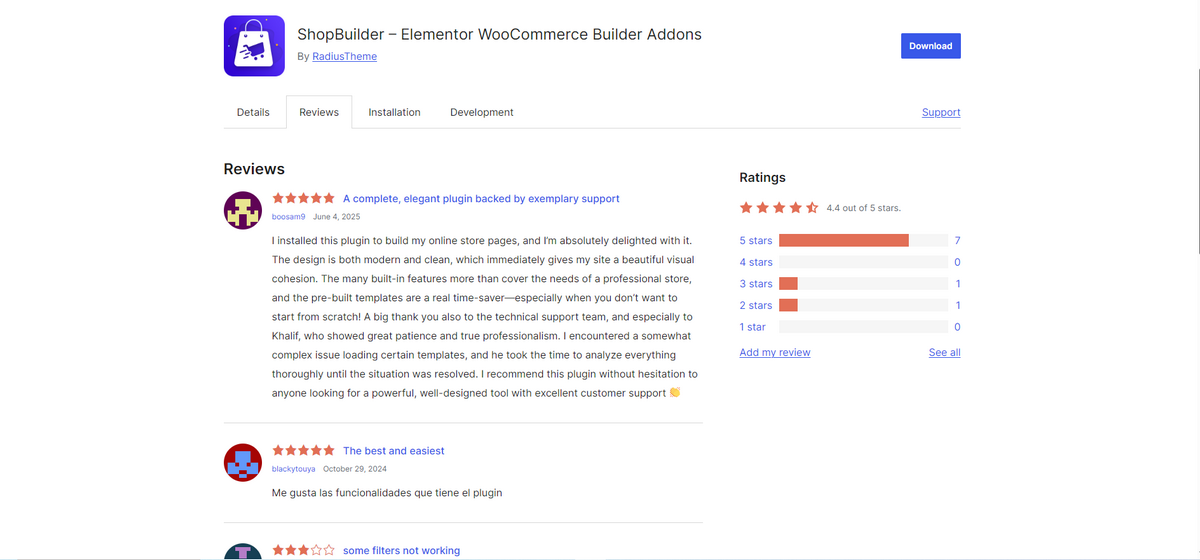
ShopBuilder also offers a similar support system and tutorials. Speaking of ratings, they are generally positive for ease of use; however, ShopBuilder’s newer presence results in fewer reviews compared to ShopEngine.
Pricing & Plans
Both plugins offer competitive pricing and run on freemium models. You can use them free of cost with access to limited features. However, ShopEngine is slightly pricier than ShopBuilder and provides fewer features compared to ShopBuilder.
| Plugin | ShopBuilder | ShopEngine |
| Yearly Pricing Begins at | $41 | $59 |
| Lifetime Plan Starts at | $95 | $149 |
Pros and Cons
We’ll now discuss the pros and cons of both plugins to help you make an informed decision about which one to use.
ShopBuilder
Below are the pros and cons of ShopBuilder.
Pros:
- Beginner-Friendly Interface
- Feature-Rich
- Intuitive Dashboard
- Quick Setup
- Strong Support Ecosystem
- Responsive Design
Cons:
- Gutenberg Support is Still in Development
ShopEngine
Here are the pros and cons of ShopEngine.
Pros:
- Robust Template Library
- Extensive Feature Set
- Compatible with Elementor and Gutenberg
- Supports Advanced Customization
- Offers Dedicated Support
Cons:
- Learning Curve for Beginners
Frequently Asked Questions (FAQs)
Can I Use Both Plugins Simultaneously?
Technically, you can install and activate both plugins on your WooCommerce shop. However, we don’t recommend this approach, as you may encounter issues while building pages using both plugins’ template builders. Even some modules may not work appropriately.
Will These Plugins Slow Down My Store?
Both ShopEngine and ShopBuilder are built with performance in mind. Therefore, they won’t slow down your WordPress store.
Do They Work with Gutenberg?
ShopEngine works with the Gutenberg editor, and ShopBuilder’s developers are currently working on making the plugin compatible with the Block editor.
Which One is Better?
In the ShopBuilder vs ShopEngine showdown, ShopBuilder stays ahead in terms of dynamic WooCommerce store creation. This plugin features an intuitive and beginner-friendly interface that enables non-coders to set up their WordPress shops easily.
Unlike ShopEngine, ShopBuilder offers more advanced features that store owners will ever need. Hence, you may try ShopBuilder, explore its features, and enjoy its benefits.


